The AU Tradeline Timeline: From Addition to Reporting
How authorized-user tradeline timing works, why the exact number of days depends on the specific card, and where each stage fits.

Written by Raquel Hudson, Tradeline Specialist
More than a decade of experience in tradeline placement, credit report analysis, and client support. Read her full background →
Watch: How the Tradeline Timeline Works
Why Timing Isn’t a Fixed Number
The authorized user tradeline timeline isn’t a fixed number of days, because card issuers don’t report account activity to the credit bureaus in real time. Experian notes that issuers commonly report at the end of a billing cycle, roughly once a month, and that each issuer follows its own schedule. So the date you were added as an authorized user isn’t the date the account first reports.
Two separate things affect when an authorized-user tradeline first appears:
- Where the addition falls in the billing cycle. Whether you’re added before or after a statement closes can affect which cycle first reports the account.
- The issuer’s own reporting speed to each bureau. Issuers vary in how quickly they send data to Experian, Equifax and TransUnion, and not every issuer reports to all three.
Because both vary by issuer and by where a specific card sits in its cycle, any general “X days” figure, including ones elsewhere on this site, is a reasonable estimate rather than a fixed promise. Each listing on our marketplace shows its own expected posting window based on that specific account’s history.
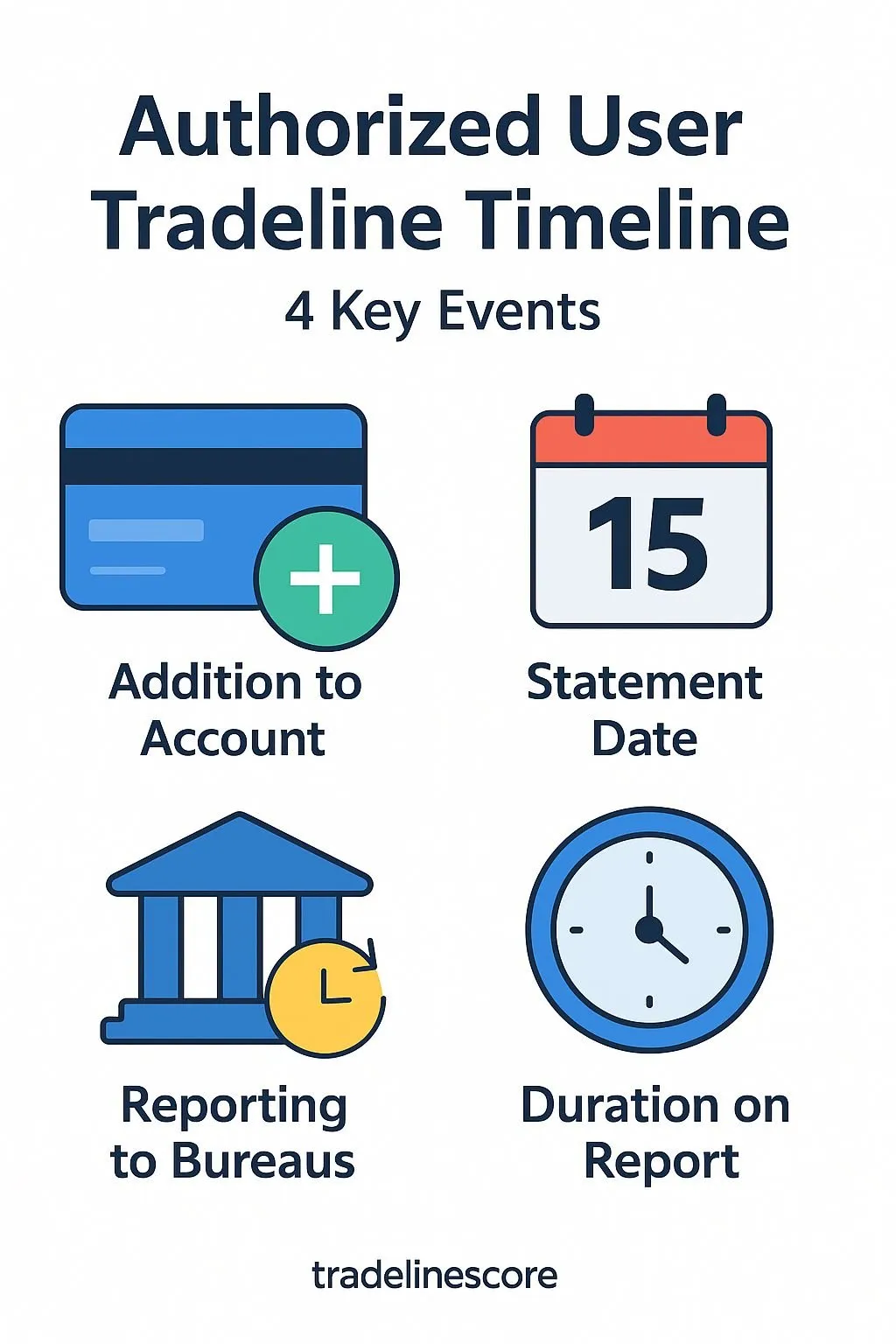
The Four Stages, Start to Finish

1. Addition to the Account
After purchase, the cardholder completes the authorized-user addition. Timing can vary by listing and cardholder.

2. Statement Date
Issuers generally report around the end of a billing cycle, so where the addition falls relative to the statement date can affect which cycle first reports the account.

3. Bureau Reporting
The issuer sends data to the bureaus it reports to. Timing varies by issuer and can differ by bureau, even for the same card.

4. Duration on File
Once posted, each listing states its own expected duration before the arrangement ends.
Why Listings Show Different Timing
Because each card has its own statement date and issuer, two listings can show different expected windows. Each listing shows its own, so you can compare them directly. Brokers placing orders for several clients will see that variation across listings, and verified brokers can access broker pricing and client tools through our Tradeline Broker Program.
For background on how credit reports are structured generally, see the CFPB’s overview of credit reports.
Common Timing Misconceptions
- Assuming every tradeline follows the same schedule. Posting follows each issuer’s own cycle, and it can differ by bureau even for the same card.
- Assuming every bureau updates at the same time. Not every issuer reports to all three, and even one issuer may report to different bureaus at different times.
- Treating a general “X days” estimate as a fixed rule. It’s an average; the specific listing shows its own expected window.
Related Timing Guides
- How Tradeline Posting Works — the purchase steps and how to confirm a posting
- How Long Tradelines Stay on a Credit Report — placement, removal and record retention
- Posting Schedule & Credit Bureau Timelines — statement dates and bureau update timing
- Posting Guarantee Policy — what happens if a listing doesn’t post as expected
Frequently Asked Questions
Why do different sources give different timing estimates?
Because posting speed varies by issuer and by where a specific card sits in its billing cycle. A general estimate is only an average; the exact timing for any one listing depends on that account’s statement date and reporting history, which is why each listing shows its own expected window rather than a single site-wide number.
What happens if I’m added right after a card’s statement closes?
The account may not report until the following billing cycle, since issuers generally report around the end of a cycle. Timing varies by issuer.
Do all three credit bureaus report at the same time?
No. Not every issuer reports to all three bureaus, and Experian notes that even one issuer may report to different bureaus at different times. Each listing notes which bureaus it has historically reported to.
How long does a tradeline typically stay on my report?
It varies by the specific arrangement; each listing states its own expected duration. See how long tradelines stay on a credit report for the details.
What if a tradeline doesn’t post within the expected window?
See our Posting Guarantee Policy for what happens and what options are available if a listing doesn’t post as expected.
About the Author
Raquel Hudson, Tradeline Specialist
Raquel brings more than a decade of hands-on experience in the credit and tradeline industries, with deep knowledge of tradeline placement, credit report analysis, inventory management, and client support. Read her full background →